That German-Singapore Lawyer

Category: Arbitration & Dispute Resolution

Dissertation Summarised

When my dis­ser­ta­tion came out late last year, a few col­leagues asked why a work so focused on Singa­pore, where Eng­lish is the lan­guage of the law, was writ­ten in Ger­man. Well, it was a Ger­man doc­tor­ate, plus the dis­ser­ta­tion was inten­ded as a con­tri­bu­tion to the debate on com­mer­cial courts in Ger­many. That’s why.

Still, they had a point, so I put togeth­er an Eng­lish sum­mary: ‘Should a Dis­pute Be Brought to the Singa­pore Inter­na­tion­al Com­mer­cial Court or to Arbitration?’

I’m pleased to share that it has now been pub­lished in this year’s Zeits­chrift für Zivil­prozess Inter­na­tion­al (ZZP Int (29) 2024, pp. 257 – 312). If the top­ic interests you, do have a look.

ZZPInt, Jahrbuch des Internationalen Zivilprozessrechts, volume 29 (2024) – on amazon.de

SICC or Arbitration?

My doc­tor­al dis­ser­ta­tion has been pub­lished as an e‑book and in print. Its title trans­lates as ‘SICC or Arbit­ra­tion? A Com­par­is­on of Pro­ceed­ings in the Singa­pore Inter­na­tion­al Com­mer­cial Court with the Advant­ages and Dis­ad­vant­ages of Inter­na­tion­al Arbit­ra­tion Pro­ceed­ings’. It does what it says on the tin, so here’s just a bit of background.

My dissertation, SICC oder Schiedsgericht?, at Duncker & Humblot

Arbitrators: Balancing Active Engagement and Party Autonomy

I was back in Kuala Lum­pur for Asia ADR Week 2024 and an Oxford-style debate on the top­ic of ‘The Extent and Lim­it­a­tions of Arbit­rat­ors’ Dis­cre­tion­ary Powers’.

At the lectern during Debate 1, ‘The Extent and Limitations of Arbitrators’ Discretionary Powers’

On the Diminishing Importance of Humanity in Arbitration

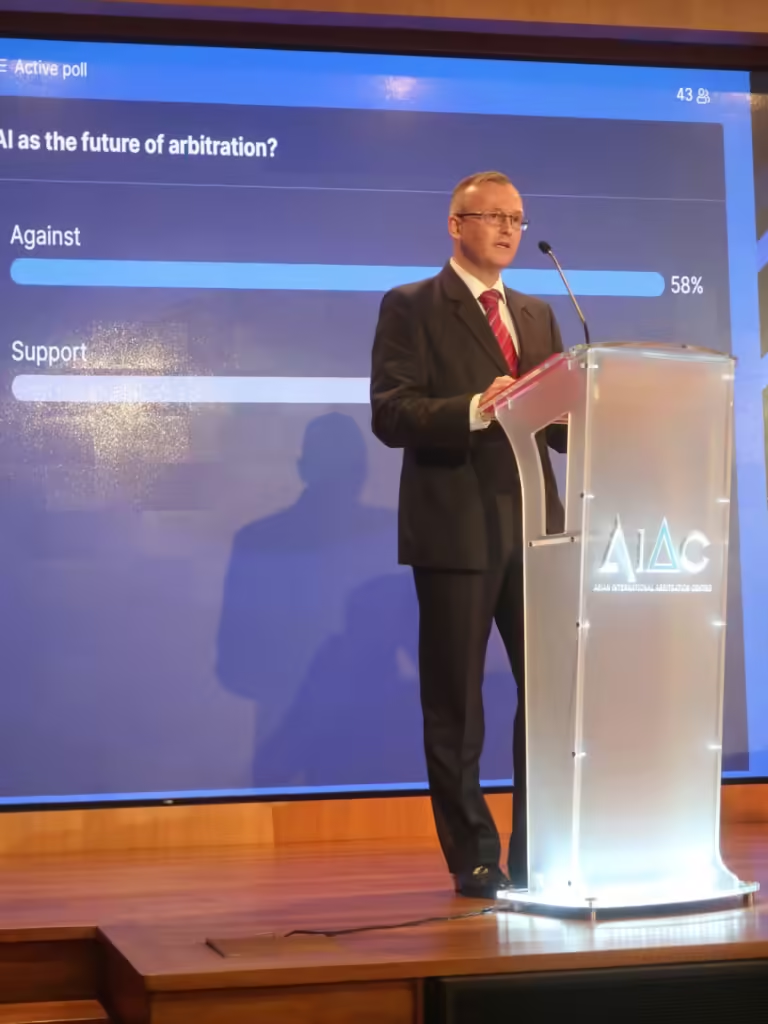
Last week­end the Asia ADR Sum­mit was held in Kuala Lum­pur. I had the hon­our and pleas­ure of par­ti­cip­at­ing in an Oxford-style debate on the top­ic: ‘This House believes that “human­ity” is dis­pens­able in arbit­ra­tion, and arti­fi­cial intel­li­gence will sup­plant arbit­rat­ors in the future’.

Here is my state­ment and my rebuttal.

Speaking at the lectern during the Oxford Style Debate, Asia ADR Summit 2024

From Munich with Law: My Way to a Doctorate

If you know me, you know that I don’t always do things in life in the ortho­dox order. After passing my first state exam­in­a­tion in law at the begin­ning of 2001, I wanted to do a doc­tor­ate. In fact, I had already made sev­er­al pre­par­a­tions for it. But then life inter­vened and took me from Ham­burg to Singa­pore. Which was fine, and I soon aban­doned the idea of becom­ing a Doc­tor of Law and con­cen­trated on my second state exam­in­a­tion, then my career, and whatever else was hap­pen­ing in my life (which, as life goes, wasn’t all smooth sail­ing). A while ago, how­ever, I picked up the idea again and pur­sued it fur­ther. Yes­ter­day I was in Munich for my oral doc­tor­al exam­in­a­tion at Lud­wig Max­imili­an Uni­ver­sity (LMU). I’m happy to report: I made it.

Me last night at the Ludwig Maximilian University of Munich (symbolic picture).

Courts and Tribunals and the Amicable Settlement of Disputes in Singapore

May courts or arbit­ral tribunals engage in the amic­able set­tle­ment of dis­putes between parties? More spe­cific­ally, may a Singa­pore court or arbit­ral tribunal act­ively do so? What do the inquis­it­ori­al pro­cesses men­tioned in the law have to do with it?

I have set out my thoughts in an art­icle that the Ger­man Arbit­ra­tion Journ­al (Schieds­VZ) has just pub­lished in its September/October 2023 issue.

Sup­ple­ment­al: Kluwer Arbit­ra­tion Blog has pub­lished a sum­mary of the article.

The galley proofs of my article ‘On the Powers of Courts and Arbitral Tribunals in the Amicable Settlement of Disputes by the Parties: A Look at Singapore and Selected Other Countries’. Inquisitorial processes are the key.

Enforceability of Foreign Emergency Awards in Singapore

An arbit­ral award made by an emer­gency arbit­rat­or sit­ting in Singa­pore is enforce­able in Singa­pore. The law is clear on this.

How­ever, the law is less clear on for­eign emer­gency awards. Are they enforce­able in Singapore?

Patrick Dahm caught by a CCTV camera taking a picture of himself on the CCTV screen

On Arbitration, Football and Vacuum-Cleaning Robots

The Singa­pore Insti­tute of Arbit­rat­ors invited me to debate the fol­low­ing motion: ‘This House Believes That Arti­fi­cial Intel­li­gence Will Have Replaced Arbit­rat­ors with­in Twenty-Five Years’. In short: can – will – algorithms replace arbit­rat­ors with­in a generation?

We were debat­ing this last night. Here are my open­ing and clos­ing statements.

Group picture of the debaters, the judges and the moderator, all arbitration practitioners

Guerrilla Tactics in Arbitration

I don’t like how we use the term guer­rilla tac­tics in inter­na­tion­al arbit­ra­tion. Refer­ring to guer­rilla dis­ap­prov­ingly implies meth­ods of tra­di­tion­al war­fare are alright. Artil­lery or old-school tac­tic­al form­a­tions – okay. Sneaky ambushes or hit-and-run attacks – not okay.

Japanese premises at night, approached by ninjas
The place of the hear­ing at night
Two birds in a dispute

How Do We Resolve Disputes? What’s with Those Algorithms?

This really very long and quasi-aca­dem­ic post is based on a speech I gave to MBA stu­dents of the Man­age­ment Devel­op­ment Insti­tute of Singa­pore some­time in 2016. Sub­ject: how do we resolve dis­putes and what bor­ders, geo­graph­ic­al or oth­er­wise, do we cross in doing so? Bor­ders and oth­er­wise, ged­dit, I was talk­ing about dis­pute res­ol­u­tion in cyber­space and algorithms.

Singapore to Ratify Hague Convention on Choice of Court Agreements

Here’s my piece on Singa­pore’s rat­i­fic­a­tion of this Con­ven­tion on Peter Ber­t’s dis­pute res­ol­u­tion blog.

The National Coat of Arms of Singapore
The Supreme Court of Singapore

Singapurischer Internationaler Handelsgerichtshof eröffnet

Anfang 2015 wurde der Singapur­ische Inter­na­tionale Han­dels­gericht­shof (Singa­pore Inter­na­tion­al Com­mer­cial Court oder SICC) eröffnet. Das Gericht ist als Teil des singapur­ischen Supreme Court für inter­na­tionale Han­dels­sachen zuständig und ver­eint schiedsgericht­liche und gericht­liche Ele­mente. Singapur will dam­it seine Pos­i­tion als inter­na­tionales Streit­sch­lich­tung­szen­trum ausbauen.

‘Language’ Difficulties between Civil Law and Common Law

Parties to a leg­al dis­pute may believe they under­stand each other’s legalese or the leg­al ‘etiquette’ applic­able. When really they don’t. This may hap­pen when a party from a civil law jur­is­dic­tion sets foot in a com­mon law envir­on­ment, or vice versa. In inter­na­tion­al arbit­ra­tion pro­ceed­ings, for example.

Appar­ently the High Court of Singa­pore had to decide a case just like this.

Court scene: a barrister (cross-)examining a witness

A Grain of Civil Law – Some (Not So) New Chords for the International Arbitration Jazz

Scene in Italy: group of children free-riding the tram
Faster, cheap­er

Inter­na­tion­al arbit­ra­tion has a prob­lem: pro­ceed­ings that take too long and are too expens­ive. To help solve this we should com­bine the best aspects of civil law and com­mon law pro­ced­ure better.

The Midnight Clause in International Arbitration

This is my speech at the In-house Con­gress in Jakarta, Indone­sia, on 23 April 2014. It was on why it’s import­ant your com­mer­cial con­tracts con­tain an arbit­ra­tion clause that works well.

Full moon at midnight

© 2014–2026 Patrick Dahm · Personal views, not legal advice · Privacy Policy