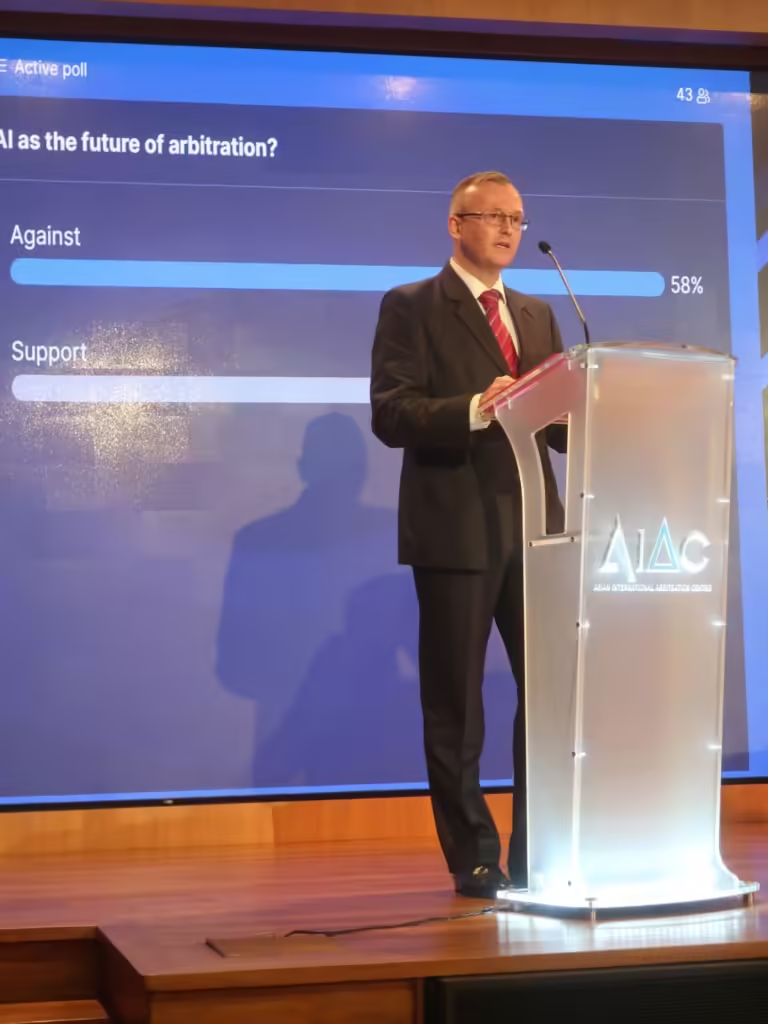
Last weekend the Asia ADR Summit was held in Kuala Lumpur. I had the honour and pleasure of participating in an Oxford-style debate on the topic: ‘This House believes that “humanity” is dispensable in arbitration, and artificial intelligence will supplant arbitrators in the future’.
Singapore has adopted the UNCITRAL Model Law on Electronic Transferable Records, in a bid to get electronic bills of lading (eBOL) off the ground after previous efforts failed. The Singapore Chamber of Maritime Arbitration has published the original English version of my article on the new law. Transportrecht, the transportation law journal, has published the German version.
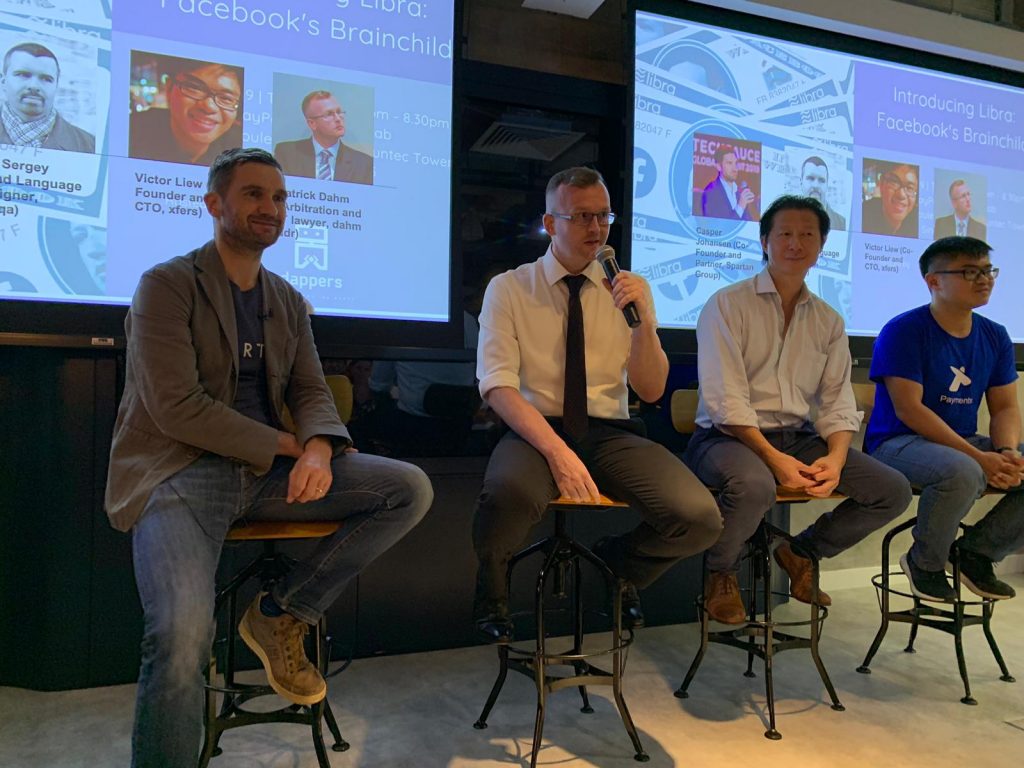
Facebook and Libra, that’s like the House of Medici on speed. The Medici family were merchants first. During the Italian Renaissance they became bankers, then princes. Then they produced four popes of the Catholic Church. It took them a few centuries to do all that. But in announcing Libra, Facebook is claiming cyber princedom (cyber papacy even?) barely fifteen years after its founding. No wonder the governments of today are stunned.
The Singapore Institute of Arbitrators invited me to debate the following motion: ‘This House Believes That Artificial Intelligence Will Have Replaced Arbitrators within Twenty-Five Years’. In short: can – will – algorithms replace arbitrators within a generation?
We were debating this last night. Here are my opening and closing statements.
As of this week, German lawyers are required to use an electronic communication tool designed especially for them: the special electronic lawyers’ mailbox (besonderes elektronisches Anwaltspostfach or beA). The problem is that the beA is inherently insecure, so it seems better to avoid using it. This would include, if possible, not litigating before a German court if there’s a chance that the opponent or the court might use the beA in the proceedings. This seems all the more appropriate where there is a risk of snooping or foul play by the opponent or third parties, or where the stakes are high – and when aren’t they?
One card to bring them all and in the darkness bind them
This is my speech at the first Computational Law & Blockchain Festival – Singapore Node on 17 March 2018. In it, I tried to explain what initial coin offerings are, why governments all over the world eye them curiously, and how governments regulate them – if they regulate them. I also questioned why brick and mortar governments regulate something so digital.
Over lunch the in-house counsel of a tech company asked me whether I ever decline work. We were making small talk, but funny she should ask. Because I have indeed chosen not to work on one or the other initial coin offering or token sale lately.
I do what I do for a living, so I’m not prone to decline work by default. But these projects didn’t smell right.
Smart contracts are described as self-executing: how they are formed is how they will be performed. This is why some of us see no (or at least less) room for legal dispute over them.
It shouldn’t be this way. Where it’s efficient, it should be possible to breach a smart contract. Even though this may lead to a legal dispute.
Yes, blockchain technology can do things which conventional ledgers or registers cannot do. A few days ago I argued that this didn’t mean blockchain should replace traditional ways of recording legal transactions wholesale. Traditional ways of recording legal transactions embed functions which blockchains don’t embed yet. Where the law demands it or wherever else it makes sense we should think about implementing them.
After reading Caitlin Moon’s instructive blog Blockchain 101 for Lawyers I commented that we should ‘think of it as a cybernotary who can authenticate — everything’.
I’ve changed my mind.
For the avoidance of doubt, I’m all for catchy analogies. They help understand much of what’s going on in cyberspace. Even better than a catchy analogy, though, is an analogy that’s catchy and apt.
This really very long and quasi-academic post is based on a speech I gave to MBA students of the Management Development Institute of Singapore sometime in 2016. Subject: how do we resolve disputes and what borders, geographical or otherwise, do we cross in doing so? Borders and otherwise, geddit, I was talking about dispute resolution in cyberspace and algorithms.
The space where all data exchange and communication of the Internet happens, cyberspace, is neutral. Nothing insecure adheres to it in and of itself. Insecurity is brought in by man who populates cyberspace, and by the tools that he has brought along. So how to regain security in this space – cybersecurity?